Dates : August 3 to August 4, 2026 Total Distance Traveled: 14.94km Portages : 2 Portages 720m
One of the biggest advantages of canoe camping over other forms of camping is that there will almost always be a campsite available. Such was the case when I started looking for a last minute campsite for the August long weekend.
Algonquin will always have a campsite available if you’re willing to portage but since I was bringing my colleague, Maryam, who was camping for the first time, I decided to book a site in The Massassauga Provincial park since it was a little more beginner friendly. The portages and campsites were well maintained, each site came with a picnic table and fire grill, and best of all, it was slightly closer to Toronto.
Since the day would only include one short portage and around 7km of paddling, I decided to leave Toronto at a liesurely 10am. The days were still long and unlike Algonquin, our exact site was reserved, so there was no need to fight for a spot on the lake.
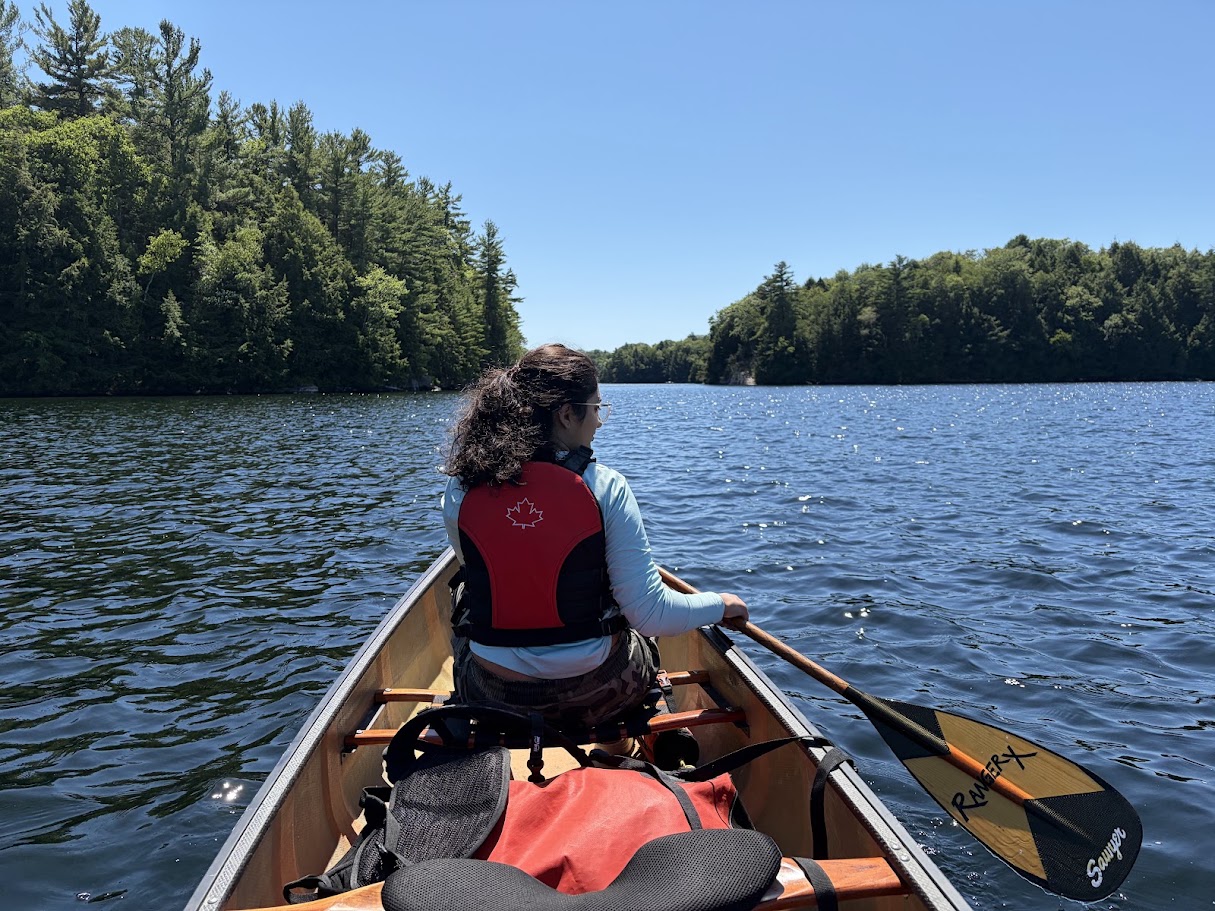
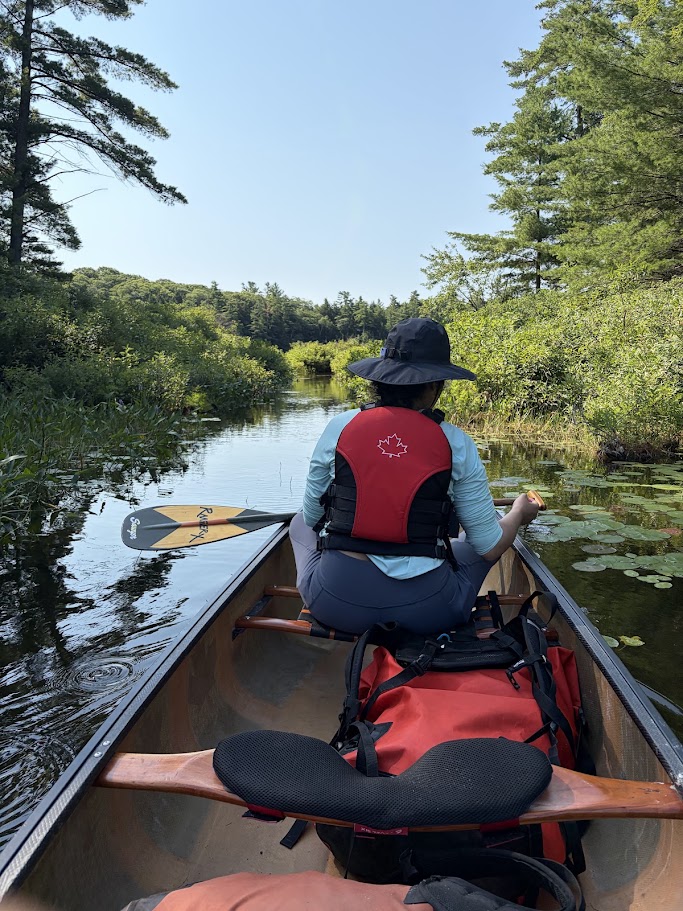
As we departed the crowded access point on Three Legged Lake, the wind started to pick up in the form of a strong headwind. The kind that could swing my canoe around 180 degrees if I let my guard down. Maryam and I inched forward, quite literally at times, until we rounded the point in front of campground 11 and headed south towards our campsite.
Campground 11 was where I stayed last year with my friend Victor and my late dog, Hana. It brought back some sad but good memories as we paddled by.
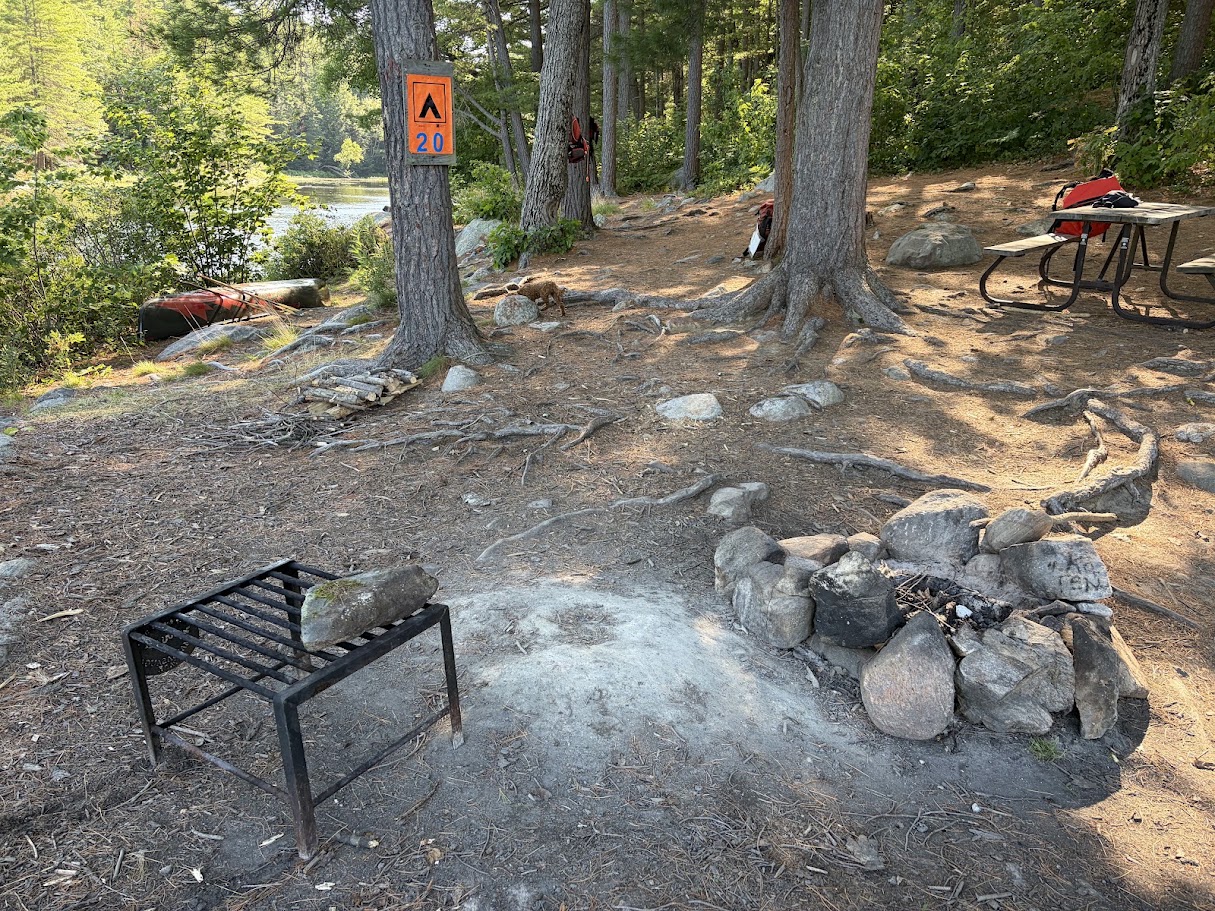
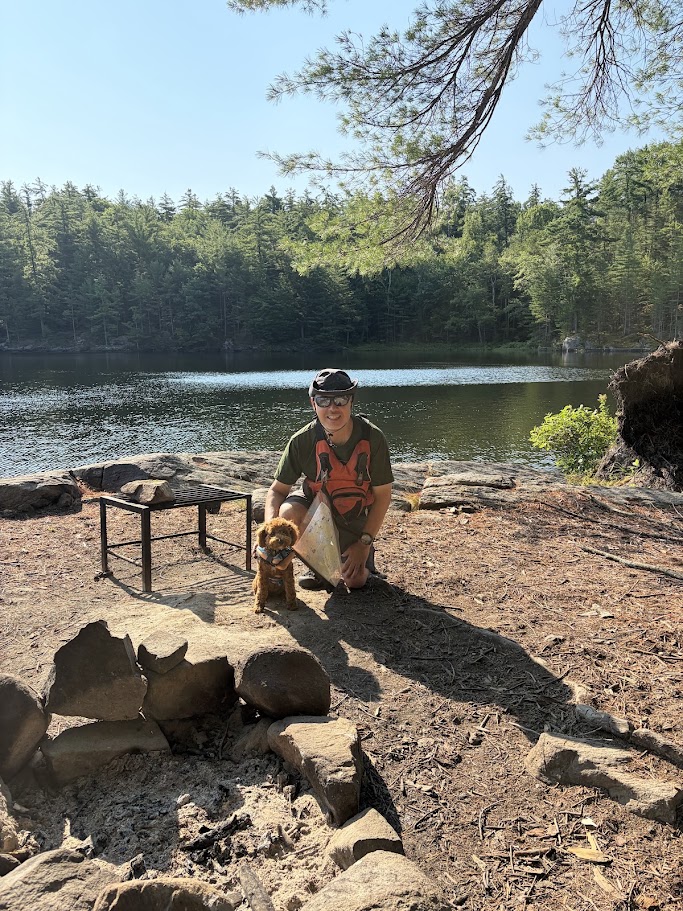
Many of the campsites in The Massassauga are quite nice and campsite #20 was no exception. Located on a point jutting into Spider Lake, it had everything one could ask for: good access to the water, exposure to wind, and plenty of flat areas to set up a tent. The only downside was that it was relatively close to campsite #19. At a park like Algonquin, this would be a four star campsite.
Paddling on Three Legged Lake
Arriving at our campsite
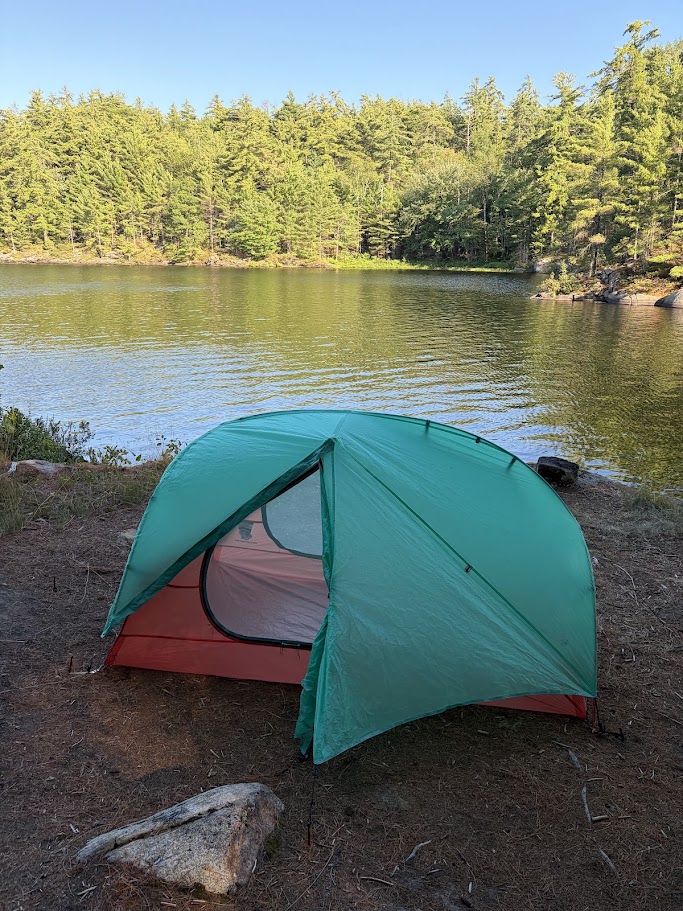
Setting up near the lake
After setting up our tents, we had a quick dinner before collecting wood for the fire. Maryam kept on asking what we’d do for the rest of the night, so I told her we’d simply stare into the fire, otherwise known as Caveman TV.
Surprisingly, we barely encountered any biting insects during the day – even on the portage. The mosquitos appeared at dusk, but by then the colder temperatures meant that we were wearing extra layers so they weren’t an issue. It was hard to believe that just a few weeks earlier, I was being eaten alive by mosquitos.
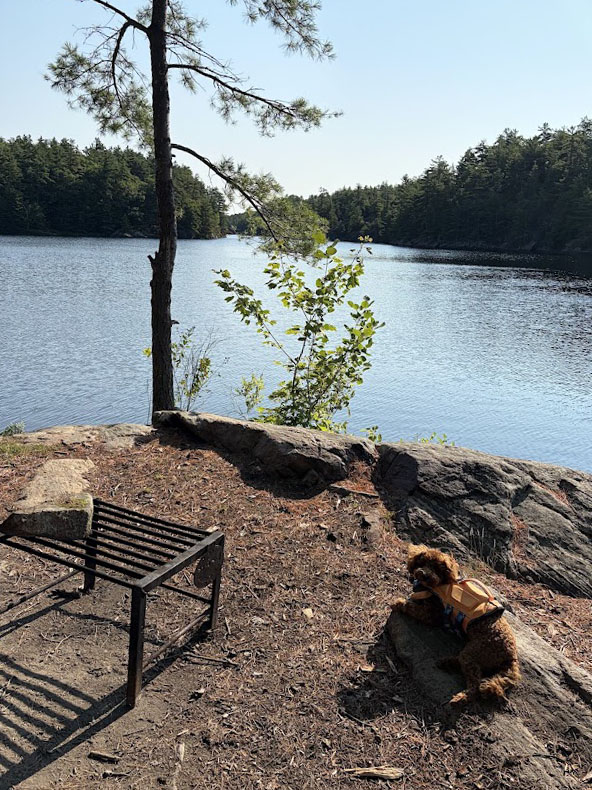
By 10pm, Maryam disappeared into her tent with Momo in tow where they’d spend the night sleeping beside each other. I followed soon afterwards when Caveman TV displayed its last glowing ember.
The following morning, we were both up by 7am and departed our campsite by 9:30am. This time, the winds were considerably lighter and ironically, a strong tailwind appeared when we were just a few hundred meters from the access point.
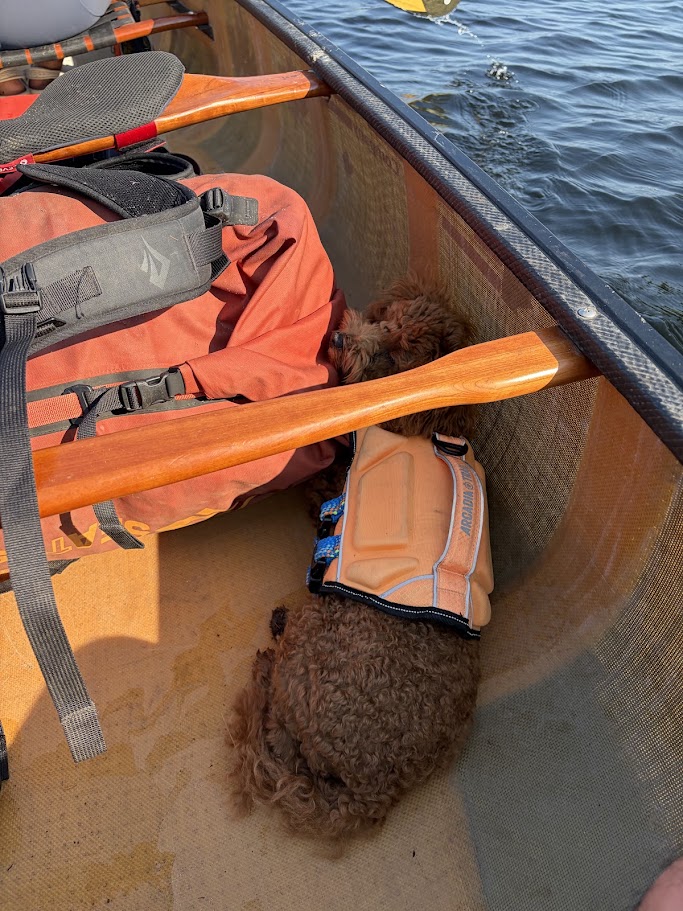
This trip marked Momo’s third outing – all at just five and a half months old. She did well, but she definitely got a little too much sun since the patch of fur above her snout has turned blonde. I’ll have to make sure she has a proper place to hide from the sun in the canoe.
Ready to leave
Approaching the end of Spider Lake
Taking shelter from the sun
Notes from the Field
Garmin Fenix 8 Pro – Inreach failed to connect for the third consecutive backcountry trip. This is unacceptable for a $2,000 watch that touts Inreach connectivity as one of its main selling point.