Dates : July 13 to 15, 2026
Total Distance Traveled: 30.1km Portages : 12 Total Portage Distance : 9.5km
Introduction
A day after my plans for an Algonquin canoe trip fell through, my friend and colleague Sagar reached out to see if we could put together an alternate trip since he happened to have a few days off.
Having done several trips with him in the past, I knew he was a capable partner. Which made him an automatic candidate to check off a challenging lake on my to-do list.
Our destination was McKaskill Lake in the SE quadrant of Algonquin Park – a lake Kevin Callan has mentioned as one of his top 10 destinations. It had many of the qualities I look for in an Algonquin canoe trip: tough portages, relatively remote lakes, and an access point I’ve never visited before.
July 13, 2026
Day 1 – Shall Lake (Access Point #17) to Shirley Lake
Distance Covered : 6.3km
Portages : 1 (1020m)
Total Portage Distance : 1020m
Total Time : 1:36hrs
The toughest part of the first day was simply getting to the access point, as it would take more than five hours from Toronto.
After a leisurely 9:30am departure, we took advantage of our shorter paddling day by stopping in Whitby to check out the relatively new MEC store. Since Momo the portage puppy had a tendency to get car sick, the stop also gave her a chance to stretch her legs and get some fresh air.
The store itself was quite large and spacious, but I felt it lacked character and resembled a Winners more than an MEC. Still, it was well stocked and conveniently located just minutes from Highway 401.
A few small purchases and several belly rubs (for Momo by the staff) later, we continued on and eventually made it to Access Point 17 at 3pm.
While checking in, the park attendant mentioned that mosquito activity dropped, although deer flies and horse flies were still plentiful. Looking around the access point, there were indeed very few mosquitos, which was a welcome surprise. The temperature was well into the 30s, and the last thing we wanted to deal with was swarms of bugs.
Of course low mosquito activity in Algonquin in mid July was too good to be true.
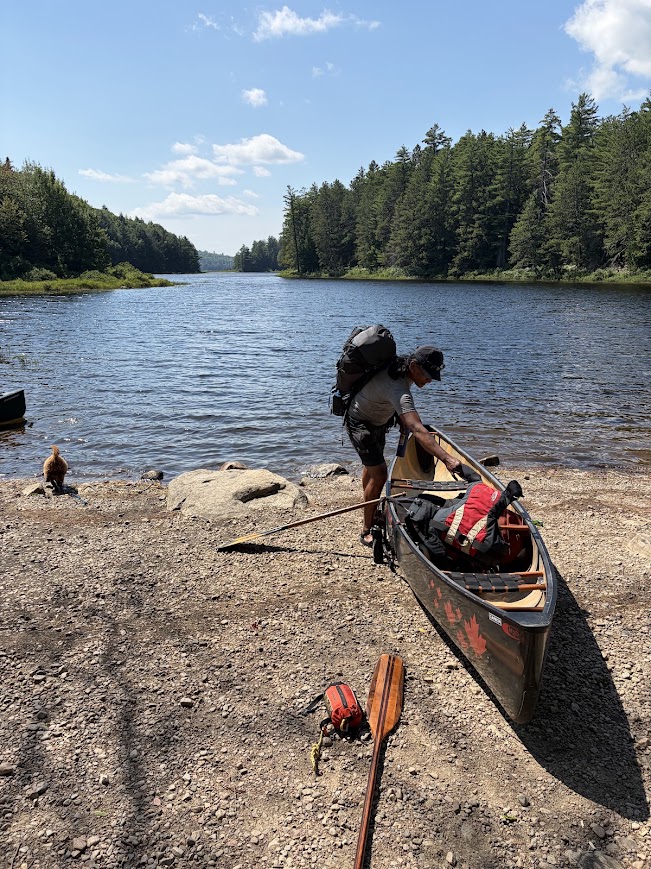
Reality hit us on the first portage. It was as though every mosquito in the area had gathered there waiting for us. By the time we reached the other side, we’d probably collected around 30 bites each.
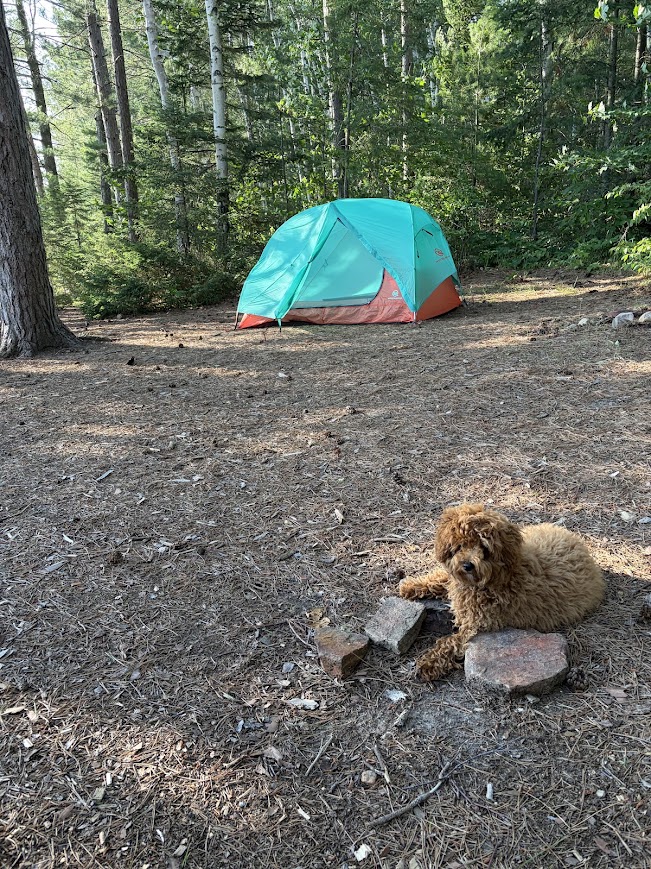
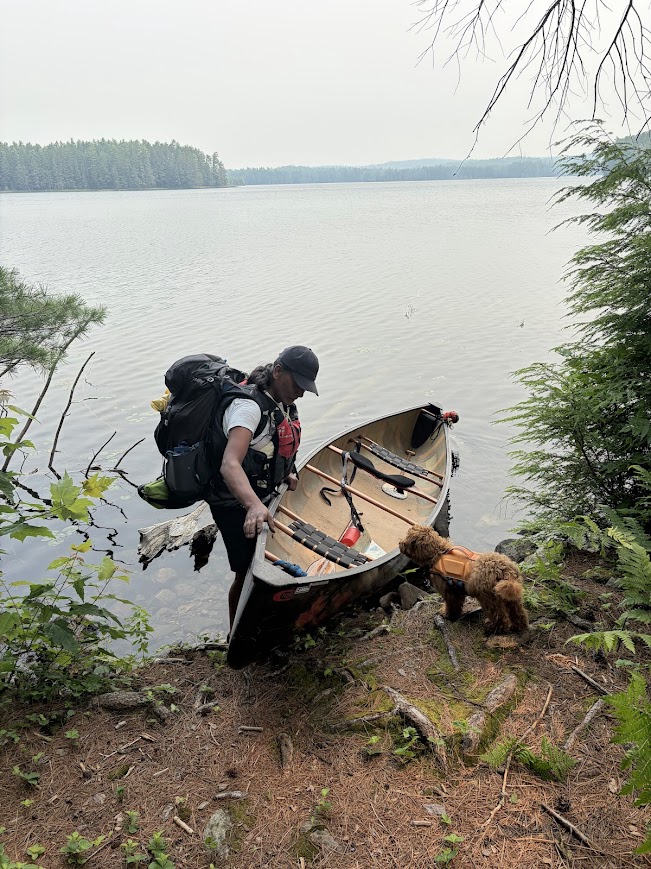
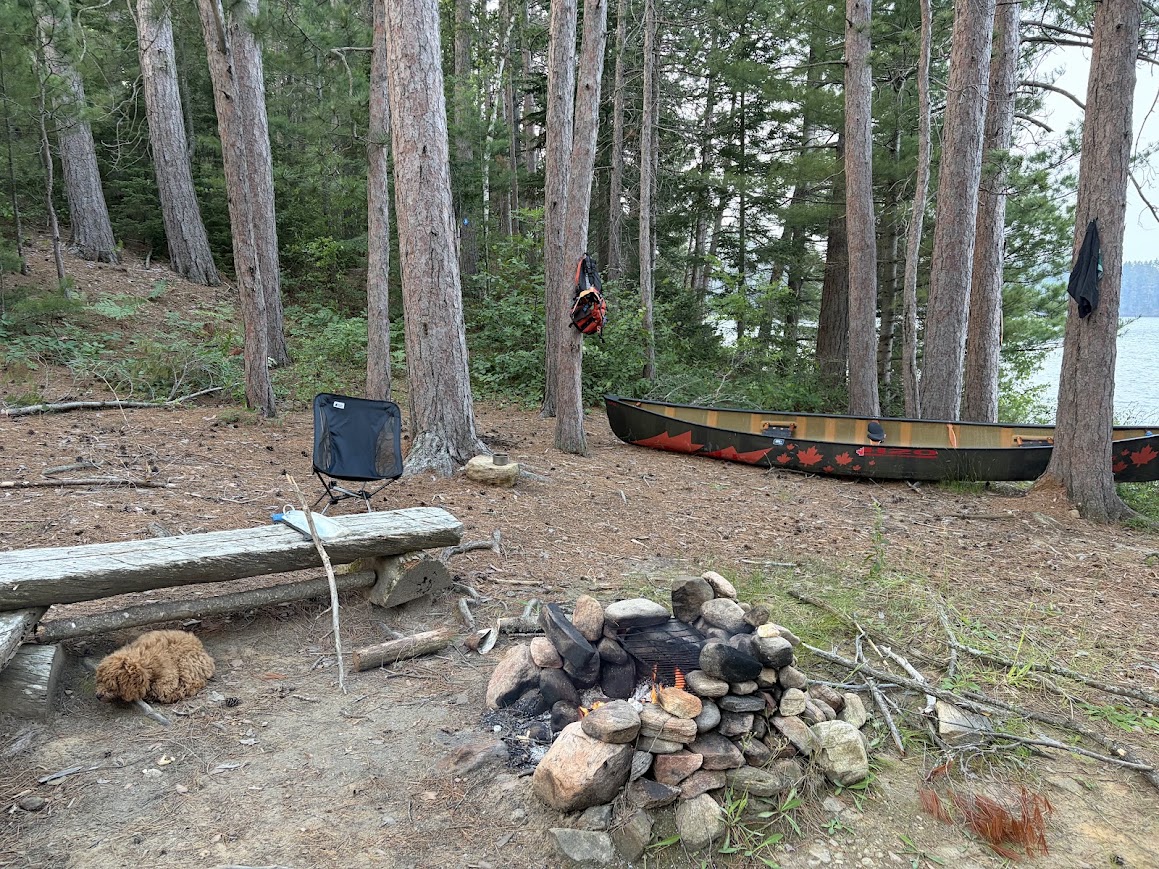
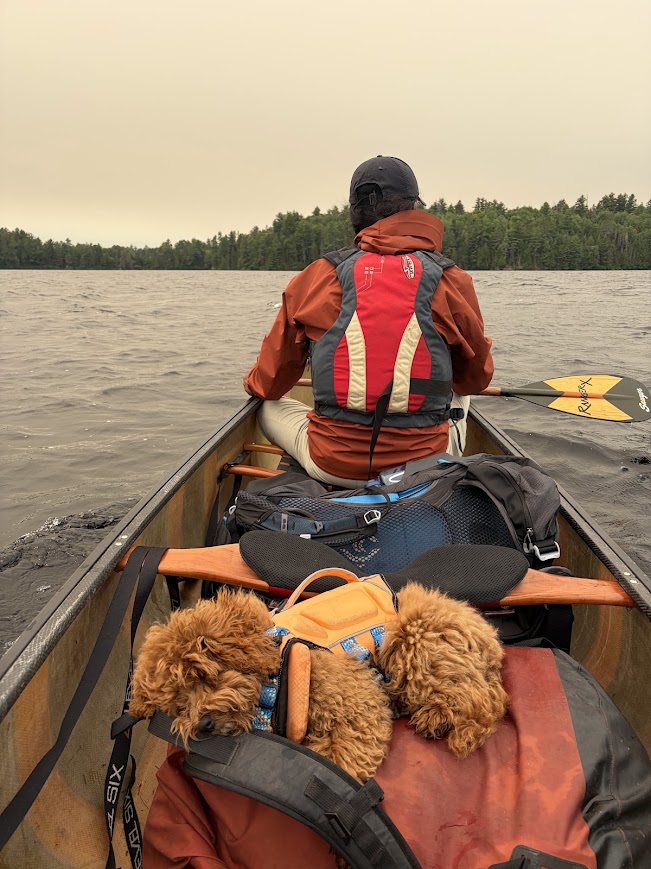
Thankfully, strong westerly winds greeted us once we reached Shirley lake. We grabbed a campsite on the west-facing shore that was fully exposed to the wind, which provided almost complete relief from the bugs. The breeze also offered some much needed cooling in the sweltering heat. Momo has never handled hot weather particularly well, so it came as no surprise that she spent most of the day in or at the edge of the water to cool off.
For this trip, I left my sleeping bag at home and slept with only a liner. I had also intended to bring my new Thermarest Neoloft but accidentally packed my Xtherm instead. So rather than enjoying a plush mattress, I’d be sleeping on my crinkly winter pad for the next two nights.
July 14, 2026
Day 2 – Shirley Lake to McKaskill Lake
Distance Covered : 9.4km
Portages : 5 (540m, 230m, 540m, 2390m, 40m)
Total Portage Distance : 3730m
Total Time : 3:57hrs
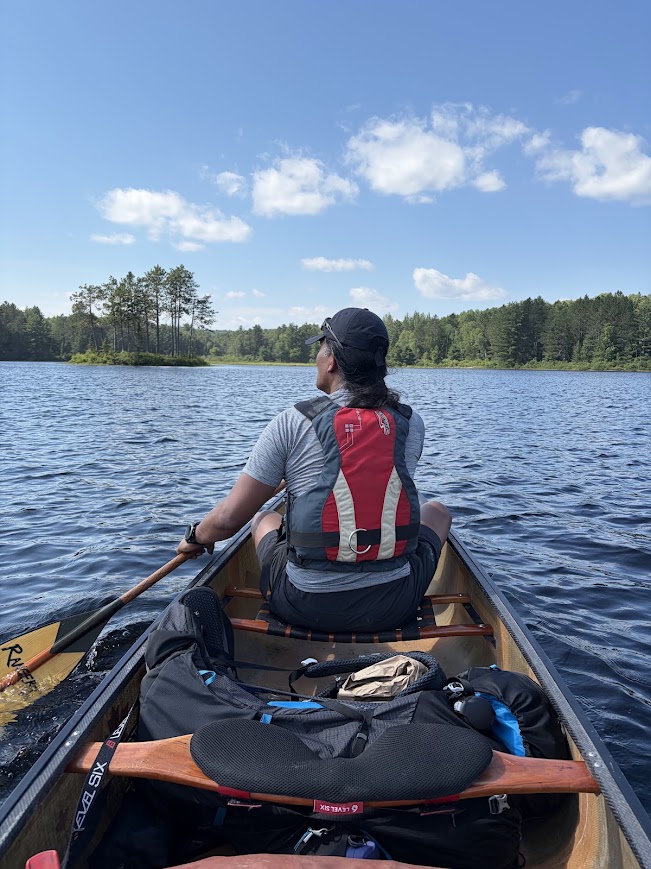
We knew the second day would be tough. Not only was it be portage heavy but it’d be the hottest day of the trip with the forecast calling for mid 30 temperatures. By the time we broke camp at 9:10am, it was already uncomfortably hot and humid.
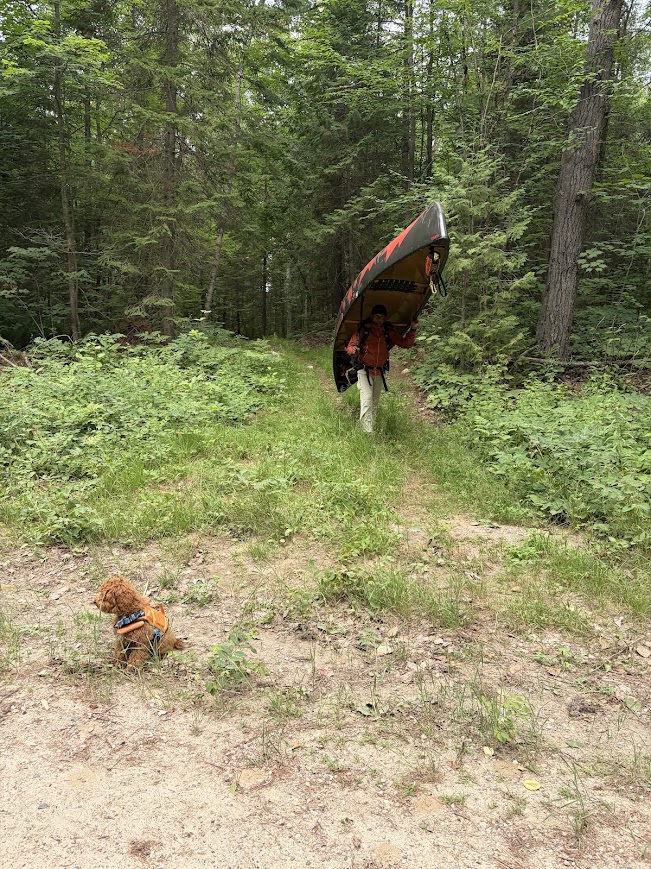
As we approached our first portage, we followed our bug avoidance routine. It’d consist of applying repellent, quickly unloading the canoe, completing the portage in a single carry with no breaks, relaunching the canoe on the other side and then paddling away from shore before taking a break. Any delays along the portage meant more time surrounded by clouds of mosquitos.
This system worked great until we came to the 2390m portage.
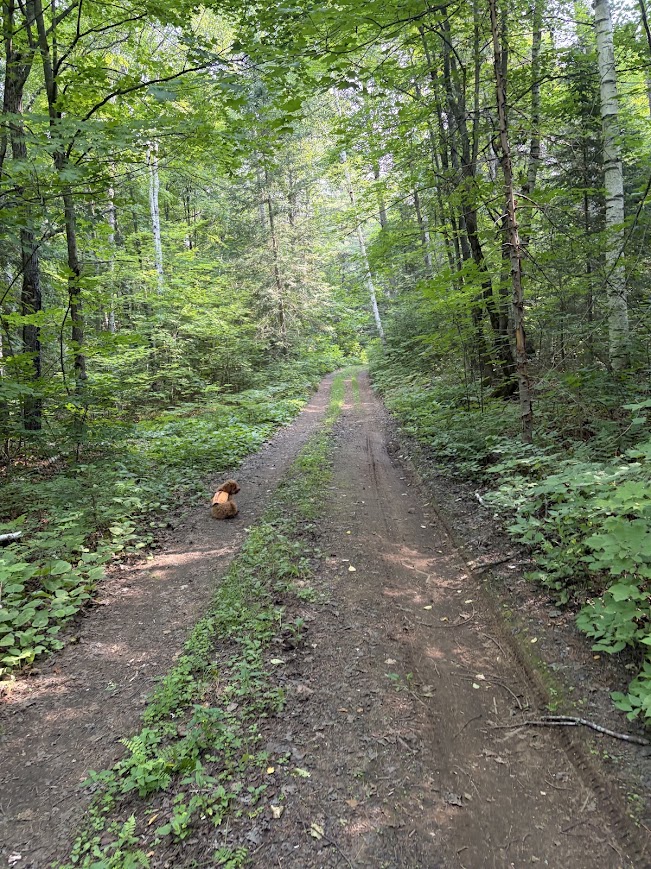
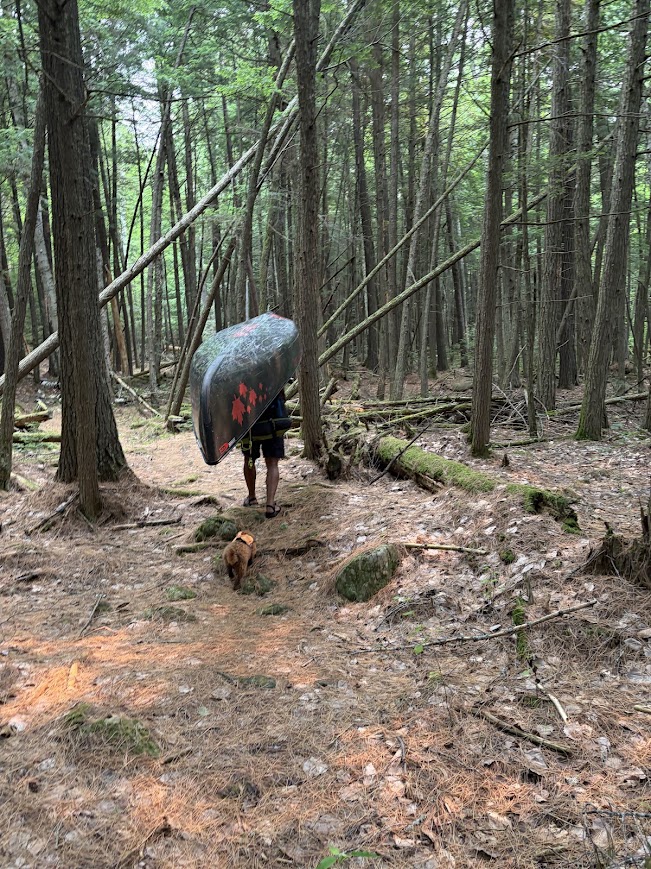
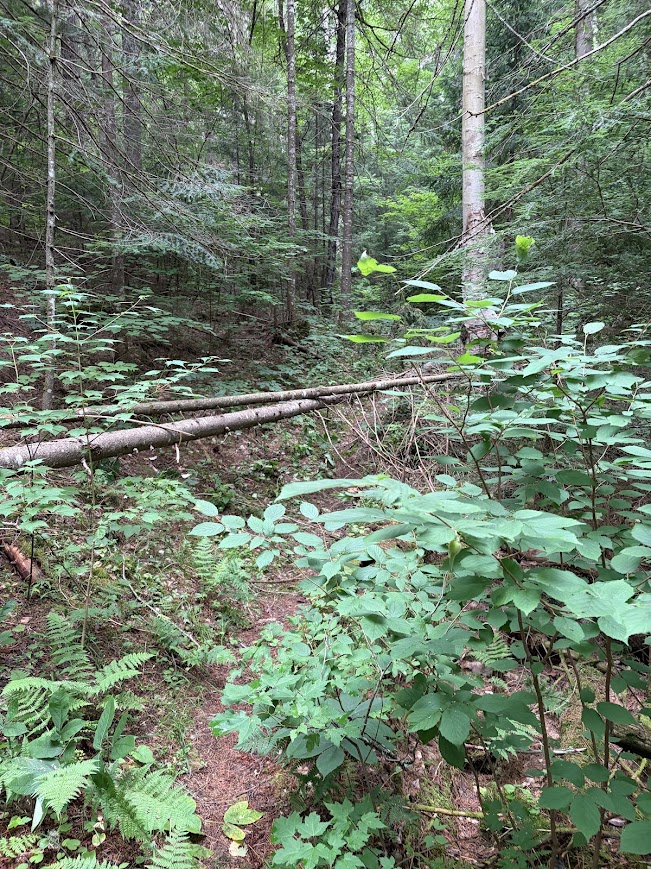
Not only was it steep, but it also appeared to have seen little recent maintenance. Several fallen trees forced us to detour or set the canoe down to climb over them. The physical effort, combined with the constant mental battle against biting insects, really began to wear us down.
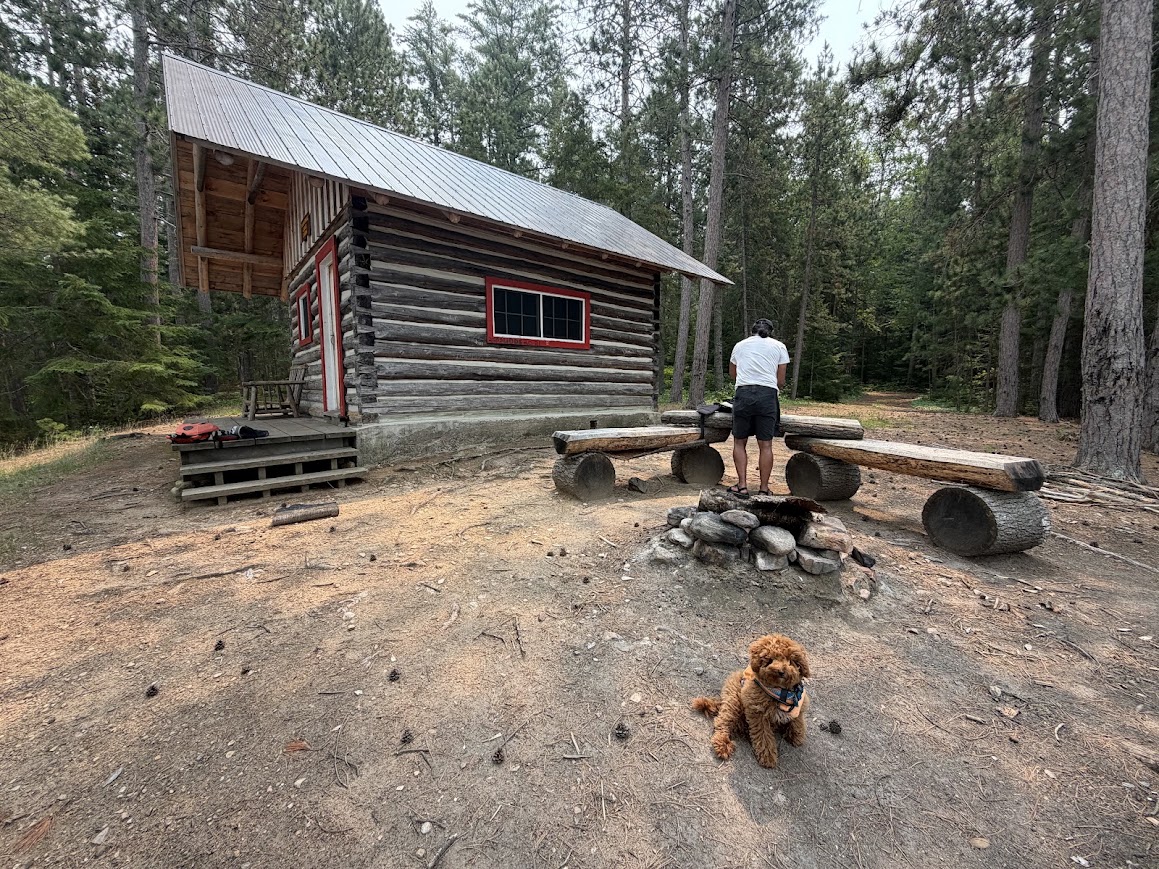
Upon arriving at McKaskill lake, we made a quick visit to the Ranger cabin on the south end of the lake. Built in 1932, this rustic cabin can accommodate up to four people. Interestingly, there are only two realistic ways to reach it. One is from our starting point, requiring a long day with nearly 6km of portaging. The other is from Access Point 17A, which involves walking more than 10km along a cart trail. It’s no surprise that the hut is usually unoccupied.
After taking a few photos,, we paddled to the to the east end of the lake and grabbed a spot with good wind exposure before setting up camp.
Shortly after dinner, my partner, who was showing signs of heat exhaustion, staggered into his tent and more or less collapsed inside. My other partner, my furry companion Momo, didn’t fare much better. She dug herself a shallow pit in the ground and collapsed on top of it.
For the next few hours, I kept myself occupied by tending the campfire to keep the insects at bay while continuing to test the inReach capabilities of my Fenix 8 Pro. Over the course of my last two trips and roughly a dozen attempts, I’ve yet to make a single successful satellite connection. My dedicated inReach handheld connected every time, but the inReach on my watch, which relies on the Skylo network rather than Iridium was pretty much useless. I’ll be talking to Garmin about that.
At around 9pm, a line of thunderstorms passed to the north of us, bringing a welcome shower. At that point, I decided to retire for the night.
July 15, 2026
Day 3 – McKaskill Lake to Shall Lake (Access Point #13)
Distance Covered : 14.3km
Portages : 6 (40m, 2390m, 540m, 230m, 540m, 1020m)
Total Portage Distance : 4750m
Total Time : 4:43hrs
By the end of the second day, Sagar and I estimated that we’d each accumulated between 70 to 80 insect bites. Despite dousing ourselves with picardin, we were itching from head to toe.
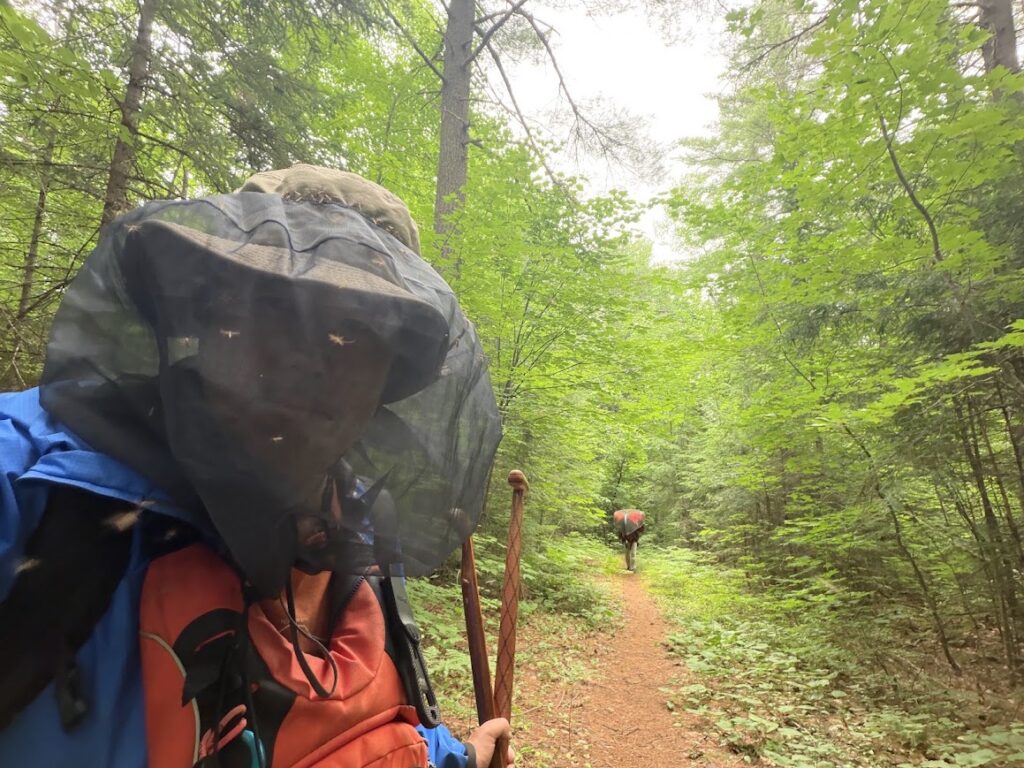
Our only reprieve on the final day was the temperature was cooler. That allowed us to wear more clothing, giving us an extra layer of protection against the insects. I wore two pairs of socks under my Keen Newports (mosquitos can apparently sting right through a wet pair of thick Smartwool socks), long pants, a Goretex shell, and an OR bug hat. I also used the last of my picardin on my hands, neck, and parts of my clothing.
This made the portages a little more bearable but I still managed to collect around 30 bites on my hands and wrists, plus another dozen or so on my neck and face where the mosquitos found a small opening in my bug hat.
Since I brought a Thermacell, I thought about securing it to the bow seat so that whoever was carrying the canoe would remain inside its protective zone. After all, portaging a canoe is the most vulnerable position you can be in while surrounded by mosquitos. In the end, I never did try my idea but I quickly regretted that decision, especially on the 2390m portage.
Poor Momo!
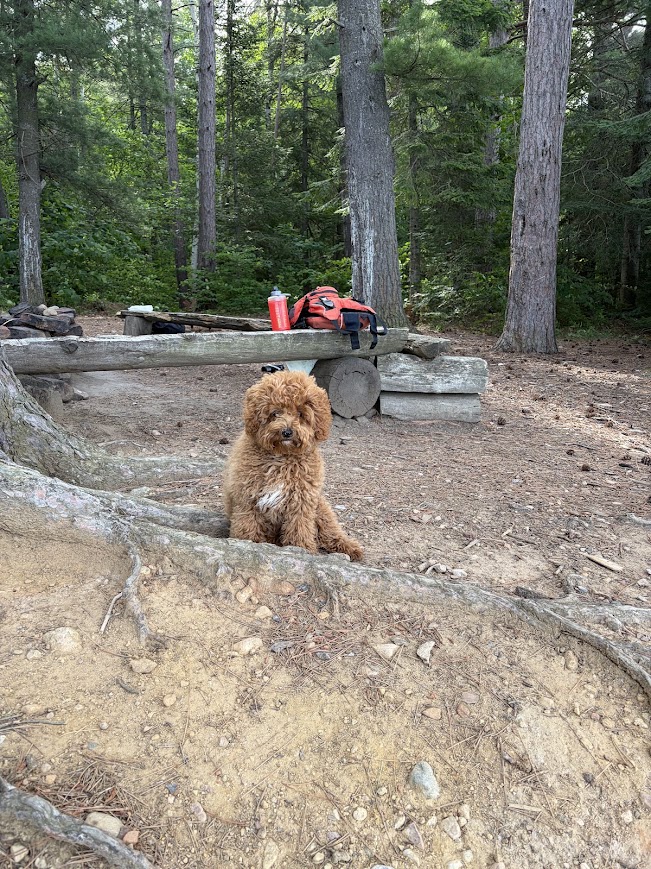
While her thick coat protected her from insect bites, the trip completely drained her. During the portages she’d sprint ahead of us before flopping onto her belly to rest. As soon as we walked past her, she’d panic, cry out, race ahead again, and repeat the whole process. At just over four months old and barely eight pounds, she did remarkably well for her age and size.
It’s going to get better little Momo, I promise you that!
There’s an old saying that there are no bad trips, only bad preparation. While we were prepared for the distance, I don’t think either of us was prepared for the sheer number of mosquitoes. Even so, a week later it’s already the memories of McKaskill Lake—not the bug bites—that have stayed with me.